Duskwood Maps & Cabins Guide
Landmarks, choke cams, blend routes, and night cabin approaches across every forest.
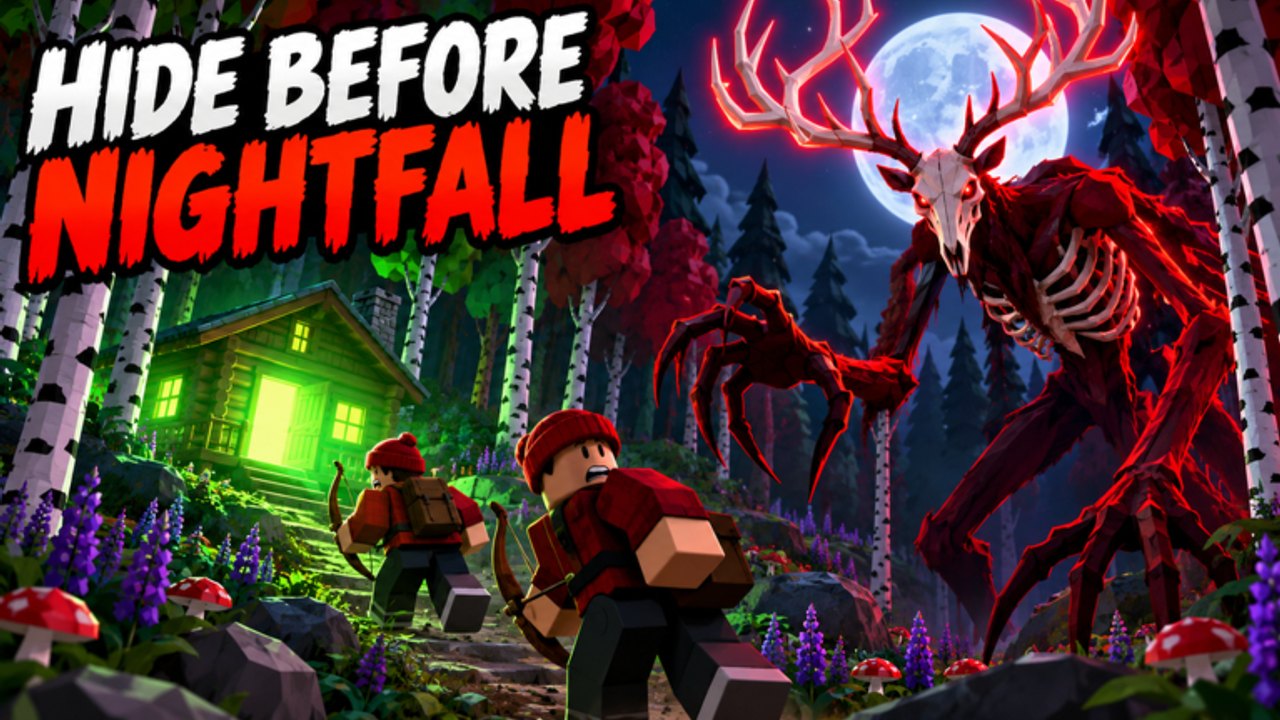
Duskwood ships with six maps, and every one of them is a different argument about sanity. Open meadows reward patient hunters with long cam sightlines. Dense tree lines reward deer who refuse to look special. Cabins decide whether night is a clutch hold or a wipe. This Maps & Cabins guide teaches a six-map learning method that works whether you are reading Hunter Guide discipline, Deer Guide bait, or Night Survival cabin routes. Pair it with Controls so E, T, and F feel automatic when you rotate, and check Creatures plus Updates whenever a patch drops a new forest or moves a spawn.
The six-map learning method
Do not memorize pixel paths on day one. Memorize three layers per map, then deepen:
- Cabin glow directions — from common herd zones, which way is “home” when night hits?
- Herd highways — where AI deer actually densify, graze, and cut between clearings.
- Cam geometry — meadows that see far, choke trees that catch cutters, and blind backsides hunters forget.
Spend one private or solo vs AI round per map only collecting those three. Next round, add deer blend routes: foliage pockets, play-dead dips, and whistle angles that pull hunters off a cabin path. Third round, run a fake night: ignore the deer and practice grouping to the nearest cabin from mid-map. That three-pass loop beats wandering for ten matches hoping landmarks stick.
Landmarks that matter on every forest
Cabins are not wallpaper. They are the night win condition for hunters and the hunting ground for creatures. Learn silhouette and glow before you learn fancy names. Meadows are hunter-favored: long sightlines, easy cam cones, harder whistle bait. Dense woods are deer-favored: short cam range, more play-dead cover, easier wrong-shot taxes. Choke cams sit on narrow herd cuts—bridges of grass between rock, tree corridors, fence gaps—where a player deer must eventually cross if they want to leave a pocket.
When you rotate as a hunter, leave at least one lens watching the path you just cleared. Player deer love looping behind a sweep that never looks back. When you rotate as deer, treat every new meadow as a camera risk: enter with the herd, exit with the herd, and save boost (Space) for broken line of sight, not for looking cool in the open.
Hunter cam sightlines
Place with E, review with T, light with F. Good cams face traffic, not scenery. On open maps, put lenses on meadow edges so they see who enters the clearing late or cuts against the pack. On dense maps, stack overlapping cones on two chokes instead of one pretty tree. After every whistle or missed shot, open cam view—many player deer freeze on camera for a full second while AI keeps chewing.
Shot discipline still beats map knowledge. Two tells before you click, one shooter at a time, reset after a wrong kill. Map mastery only multiplies those rules; it does not replace them. Full hunter habits live in the Hunter Guide and the Hunter role page.
Deer blend routes
Your job on every map is to look boring in the places hunters expect drama. Eat (E) with the herd. Whistle (Q) from an angle that paints a wrong bush, then leave. Play dead (G) in dips and shadow, not in the center of a cam cone you already failed. Boost through gaps AI ignores only when a hunter’s camera or eyes are elsewhere.
Learn one “safe boring” route and one “bait and vanish” route per map. Safe boring stays mid-herd and taxes hunters who spray. Bait and vanish uses whistle, isolation theater, then foliage. Deep patterns sit in the Deer Guide and Deer pages—use this maps page for where those patterns live in space.
Night cabin approach
When sanity is one mistake from zero, stop greed hunting and call cabin routes early. Group so the creature cannot pick a straggler. Approach from cover when you can; open meadow runs into a Wendigo or Werewolf pounce are how stacks donate the round. Creatures should learn cabin glow as a dinner bell: roar (Q), pounce (Space), and for Skinwalker use F deer form to break sightlines between lunges. Cabin fights are covered end-to-end in Night Survival; map knowledge just shortens the path to the door.
Pre-night habits that save lives:
- Name the cabin by landmark (“north glow past the split meadow”), not by hope.
- Assign who watches the rear path while others push.
- Keep a cam on the approach if you placed one earlier—creatures and late deer both reuse those lanes.
How patches add maps
Duskwood has updated near-daily since late October 2026. New maps, hunt-size pushes toward six, and shooting-range polish all change which forests you queue into. When Updates lists a new map, run the three-pass method the same night: cabins, highways, cam geometry. Do not assume old choke cams still face traffic after a layout tweak. Quests and leaderboards often reward clean plays on the newest forest—learn it before you grind it. Progression context lives in Quests & Leaderboards; aim warm-ups before public still belong in the Shooting Range guide.
Map drills you can run tonight
- Cam race (30 seconds): cover two chokes, then review footage for blind backsides.
- Cabin scramble: from a random mid-map point, call and reach glow under a timer.
- Herd shadow: as deer, stay mid-pack for sixty seconds without whistling—on each map.
- Night fake: ignore the kill, practice group cabin entry while someone plays creature pressure.
Related reading
Return to the Guides Hub for the full list. Cross-link role deep dives, Sanity & Trail Cams for the meter that makes maps matter, Getting Started for first-hour flow, and tier pages under Tier List. Bookmark this page, update your landmark notes after patches, and rotate who calls cabin routes so the whole stack owns the forest—not just the best fragger.
Frequently Asked Questions
Quick answers to the most common questions.
How many maps does Duskwood have?
Six maps at launch and live play. Learn cabin glow, herd highways, and cam geometry on each instead of memorizing pixel routes on day one.
What should hunters prioritize on a new map?
Place cams on real herd traffic and meadow edges, learn at least one cabin approach, and refuse panic shots until two tells agree.
How do deer use map knowledge?
Deer learn blend routes, foliage dips for play dead, and whistle angles that pull hunters off cabin paths while staying mid-herd when pressure is high.
When should a stack move to cabins?
When sanity is nearly gone or a confirm looks unlikely. Call glow landmarks early so the creature cannot isolate a straggler at night.